

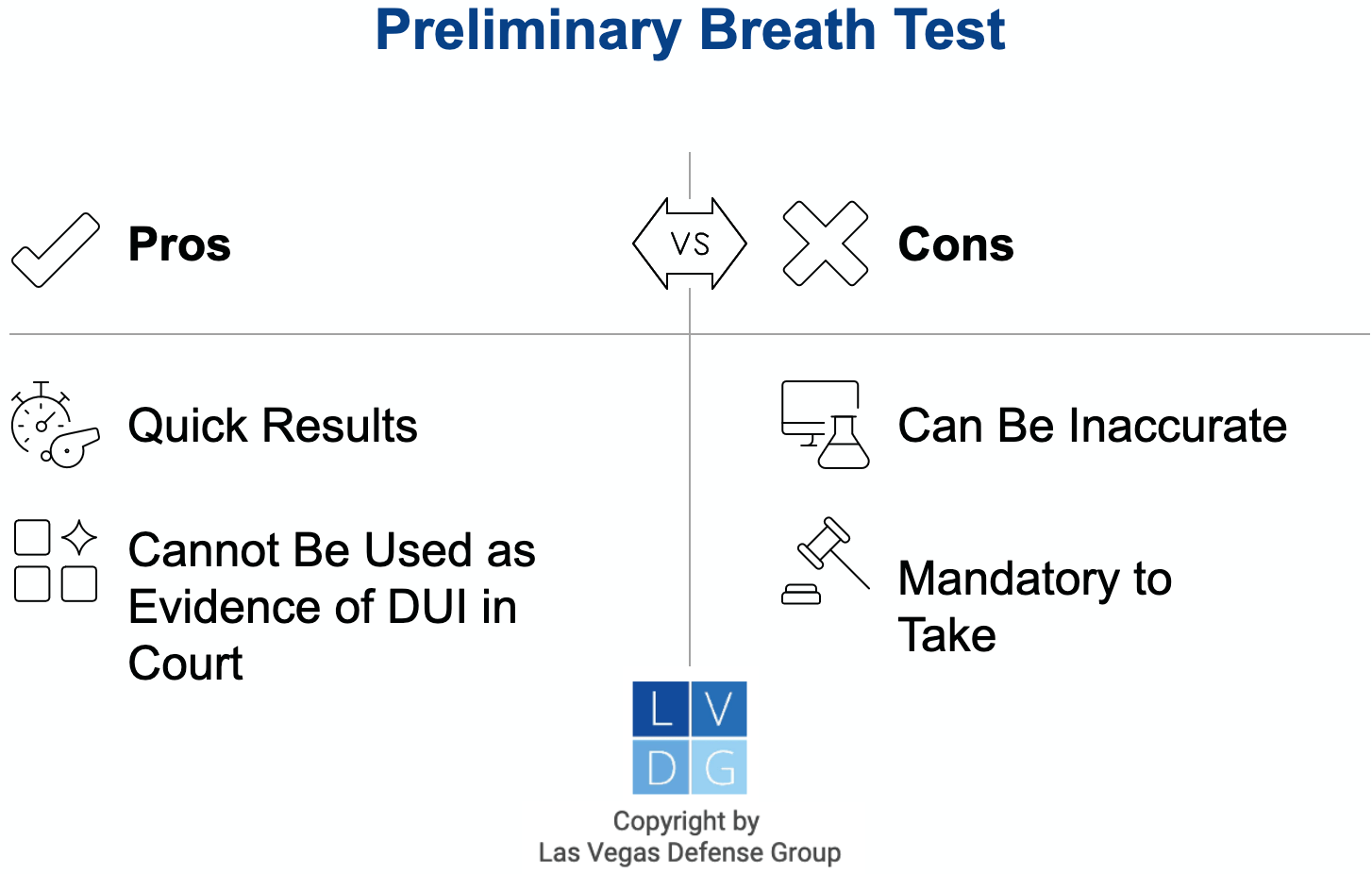
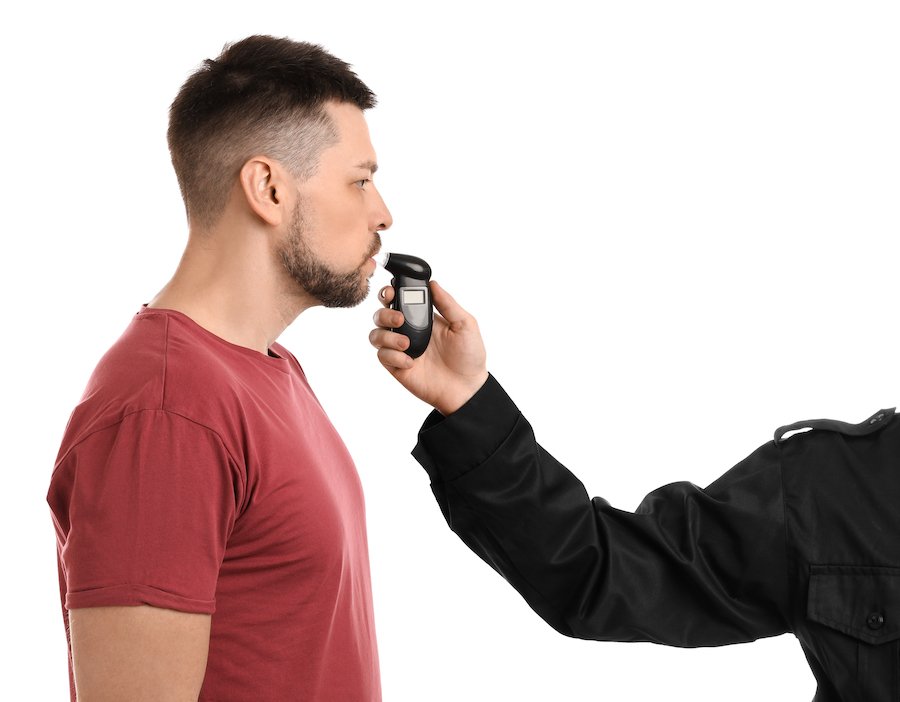
The Preliminary Breath Test (PBT) is a handheld breath testing device that Nevada police use during a roadside DUI investigation. The purpose is to determine whether you are intoxicated and should be arrested for drunk driving.
The PBT is sometimes referred to as a “roadside breath test” or “preliminary alcohol screening” (PAS). The results can mean the difference between an officer letting you go or placing you under arrest for DUI.
 To help you better understand the law on Nevada’s preliminary breath tests, our Las Vegas DUI lawyers will explain the following:
- 1. How are PBTs used?
- 2. PBTs vs. Post-Arrest Tests
- 3. Should I ever refuse the PBT?
- Additional Reading
1. How are PBTs used?
Typically, a police officer pulls you over for allegedly violating a Nevada traffic law (such as speeding or swerving). While asking you for your license and registration, the officer is looking for signs that you may be drunk or high. Indicators include:
- bloodshot eyes,
- slurring speech, and/or
- the smell of alcohol or marijuana.
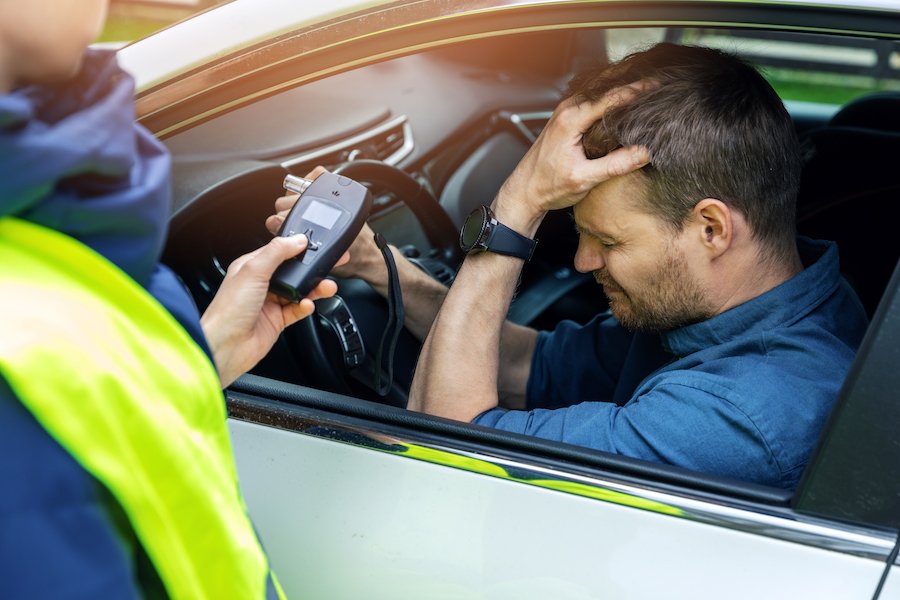
If the officer believes you may be intoxicated, they will ask you to breathe into the preliminary breath test device. A blood alcohol concentration (BAC) reading of .08% or higher is automatically illegal.1 However, you can still be guilty of DUI with a legal BAC reading as long as you are at all impaired by drugs or alcohol.2
The officer may then ask you to perform field sobriety tests (such as the walk-and turn, the one-legged stand, and the eye test). At that point, if the officer believes there is probable cause you committed DUI, they will arrest you.
2. PBTs vs. Post-Arrest Tests
A preliminary breath test is different than the evidentiary breath test or blood test you take after you are arrested for DUI. Unlike an evidentiary chemical test, a PBT cannot be used to prove you were driving drunk: It is merely a tool to help an officer decide whether to arrest you.3
The main similarity between PBTs and evidentiary breath- and blood tests is that they are mandatory under Nevada’s “implied consent” rule. (Note that if the police suspect you are under the influence of drugs, you are required to take a blood test following your arrest because breath tests do not detect drugs.)4
If you refuse the PBT, the officer will arrest you if “reasonable grounds” exist that you committed DUI.5 Then, if you refuse to take an evidentiary breath or blood test, you face automatic revocation of your driver’s license for at least one year.
The following table compares and contrasts preliminary breath tests with evidentiary breath tests in Nevada.
|
NEVADA DUI LAW |
Preliminary Breath Test |
Evidentiary Breath Test |
| When is it administered? | When police have reasonable suspicion you may be intoxicated | After you have been arrested for DUI |
| Is it mandatory? | Yes | Yes, unless you take a blood test instead |
| Can results be used in court to show I was intoxicated? | No | Yes |
| What if I refuse? | Police will arrest you for DUI if “reasonable grounds” exist. | You lose your license for one year, even if your DUI charge gets dismissed |
3. Should I ever refuse the PBT?
Since Nevada’s preliminary breath tests are mandatory, there is little advantage to refusing to take one.
Even if you believe you will fail the PBT because of residual mouth alcohol from a recently consumed drink, the PBT cannot be used to convict you in court. By the time you take the evidentiary test after your arrest, your mouth alcohol will have dissipated anyway.
Certainly, you can politely suggest to the officer (assuming that your statements are truthful) that your “DUI symptoms” are caused by something other than drinking, such as:
- allergies or a cold,
- a chronic medical condition that can cause a falsely high BAC reading (such as GERD or diabetes),
- crying, or
- lack of sleep.
However, the officer will probably not believe you and arrest you anyway. Follow the officer’s instructions when in doubt and talk as little as possible. Anything you say can be used against you.6
Additional Reading
For more information about Nevada DUI laws, refer to our related articles:
- Nevada DUI: Should I choose a breath test or a blood test? – a side-by-side comparison of the pros and cons of each chemical test
- The court process in Nevada DUI cases – a step-by-step look at how drunk/drugged driving cases proceed through criminal court
- Top 20 defenses to a Las Vegas Nevada DUI charge – overview of the most common ways to fight DUI charges
- I was suffering from hypoglycemia when I was arrested for DUI in Nevada. Can I use this to fight the charges? – a deep dive into how diabetes can affect breath test results
- Do I have to admit that I’ve been drinking if I’m pulled over for DUI in Nevada? – a discussion of how you should be polite to police but not answer any questions
Legal References:
- NRS 484C.110.
- Same.
- NRS 484C.150.
- Same.
- Same and NRS 484C.160.
- See also State v. Sample (2018) 134 Nev., Advance Opinion 25.